Pawful Dreams may earn a commission when you buy through links on this page, at no extra cost to you. Please read our Affiliate Disclosure for more information.
Last updated: September 2026
Quick Verdict
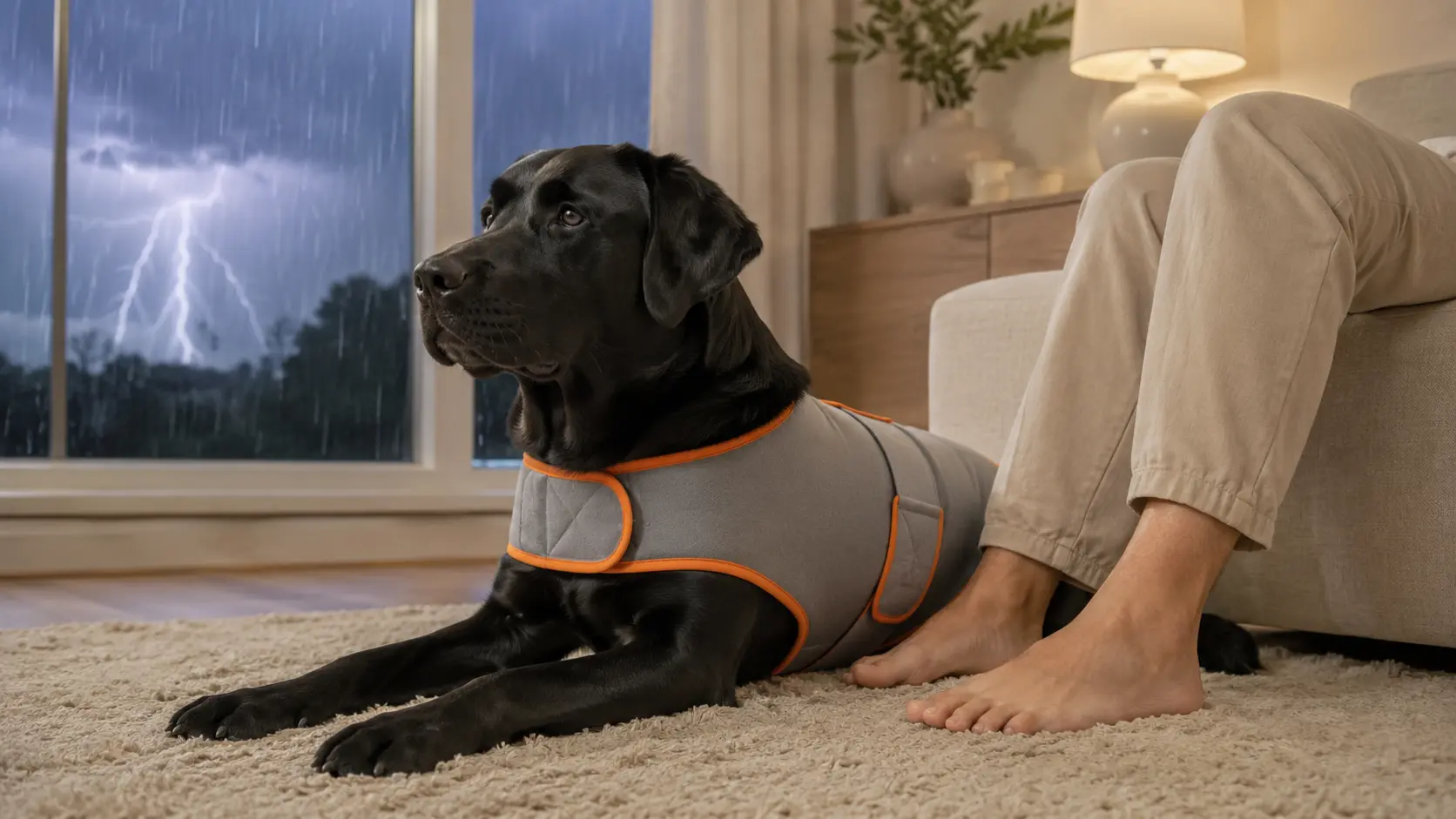
Direct Answer: ThunderShirt is a compression wrap marketed to apply gentle, constant torso pressure during storms, fireworks, and travel. Some dogs may appear calmer, but a 2024 systematic review found weak, limited, and inconsistent evidence for anxiety reduction. It remains a drug-free management option to try for predictable triggers, not a clinically proven treatment.
Thundershirt for dogs is a legitimate, gentle-pressure calming tool — not a guaranteed cure. The owner feedback reviewed for this article ranges from reports of marked calming to no noticeable effect.Timing, correct sizing, and snugness are key to getting the best result. Worth trying for situational triggers; don't expect it to stop every full panic episode.
Check Current Price on Amazon →
Who It Is For
This dog anxiety vest is built for dogs with situational, predictable anxiety triggers — thunderstorms, fireworks, car rides, vet visits, or travel. It may be most useful when an owner can anticipate the trigger and apply the wrap before the anxiety response escalates, although individual dogs may respond differently.
It's also a reasonable first step for owners who want to try a non-pharmaceutical option before considering medication, and for dogs whose anxiety is moderate rather than severe. Owner-reported success is genuinely inconsistent — one long-running community thread includes reports ranging from a dog that instantly stopped spinning and settled, to owners who say it did nothing at all. An often-cited approximate 80% owner-reported figure comes from manufacturer-linked, self-reported data and should not be read as independent clinical evidence. The honest framing: worth trying, not worth expecting a guaranteed result from.
For a broader plan around predictable noise triggers, see our dog fears and anxiety SOS guide. If ear-covering sound dampening may suit your dog better than torso pressure, compare our Happy Hoodie for dogs review.
Main Features
- Patented pressure-wrap design — applies gentle, constant, swaddle-like pressure across the torso, similar in concept to compression techniques used in human anxiety management
- Velcro closure system — allows for a fully adjustable, cinched fit, which is required for the compression mechanism to actually function
- Multiple size and style options — Classic and Sport styles size down from a dog's chest measurement, while the Polo style sizes up — these are not interchangeable sizing charts
- Breathable, lightweight fabric — designed to be worn during defined periods of need, with fit and comfort checked regularly
- Reusable across trigger types — storms, fireworks, vet visits, grooming, and travel all use the same wrap
Pros & Cons
| Pros | Cons |
|---|---|
| Drug-free option | Effectiveness is genuinely dog-dependent — not every dog responds |
| Reusable across every noise or travel trigger | Sizing runs counterintuitively — Classic/Sport sizes down, Polo sizes up, and getting it wrong is the most common source of returns |
| Manufacturer sizing options cover most breeds, including giant breeds | Must be fitted snugly according to the manufacturer's instructions — a loose fit may reduce the intended pressure, while an excessively tight fit can cause discomfort |
| Fast to put on once you know the routine | Velcro rip sound is itself a stressor for some dogs and even some cats, occasionally creating fresh anxiety on application/removal |
| No batteries, no app, works anywhere | Fit, comfort, skin condition, temperature, and the dog's response should be checked during use |
Sizing tip that matters: a 140 lb Great Dane owner needed an XL, not the XXL that chest measurement alone suggested — for large and giant breeds especially, follow the brand's specific size-down guidance for the Classic/Sport line rather than measuring and rounding up.
Who Should Skip It
Best thundershirt for dogs searches often assume it works for every anxiety scenario — it doesn't. Lower your expectations if your dog is already in full panic mode by the time you reach for it. Putting the wrap on a dog that's already pacing, drooling, or hiding may not be enough to settle the episode, and some dogs may resist being dressed while highly distressed.
Also skip it if you cannot achieve a secure but comfortable fit according to the manufacturer's instructions. A loose fit may provide little intended pressure, while an excessively tight fit can cause discomfort. During the first few uses, check the fit and your dog's comfort every one to two hours. If it is used for an extended period, remove it at least twice daily, and remove it sooner if you notice irritation, overheating, breathing difficulty, restricted movement, or increased distress.
Head-to-Head Comparison
| Factor | ThunderShirt Classic | Generic No-Name Compression Vest |
|---|---|---|
| Sizing guidance | Documented, breed-specific charts (with known size-down quirk) | Often generic sizing with no breed-specific guidance |
| Fabric / closure quality | Purpose-built breathable fabric, reinforced Velcro | Variable quality, inconsistent Velcro grip and durability |
| Return / satisfaction policy | Manufacturer-backed return policy in most cases | Often limited or no return policy through third-party sellers |
| Owner-reported track record | Extensive, multi-year community feedback across breeds | Little to no independent track record |
| Best for | Owners willing to follow the size-down/pre-trigger application rules for best odds | Budget test only if ThunderShirt is unavailable |
Safety / Veterinary Guardrail
Whether anxiety vests for dogs work is not the only question when a dog's anxiety is severe. A compression wrap is a comfort and management tool, not treatment for a serious panic or phobic disorder. It is not a substitute for veterinary care when a dog shows destructive escape attempts, self-injury, prolonged drooling or panting after the trigger ends, or complete shutdown or hiding for hours. If your dog's reaction to storms or fireworks looks like that, talk to your veterinarian or a board-certified veterinary behaviorist about a broader treatment plan, which may include desensitization and counterconditioning or prescription medication used alongside management tools.
During the first few uses, remove the ThunderShirt every one to two hours to check the fit, skin, and your dog's comfort. If used for an extended period, the manufacturer advises removing it at least twice daily. Remove it immediately if you notice breathing difficulty, restricted movement, irritation, unusual heat stress, or increased distress.
Sources: VCA: Treating Fear of Storms and Fireworks in Dogs; Merck Veterinary Manual: Behavior Problems in Dogs.
Frequently Asked Questions
How long before a stressful event should I put the ThunderShirt on?
Apply it 20–30 minutes before a stress event so the calming effect has time to take hold before the trigger starts.
Do all ThunderShirt styles size the same way?
No. The Classic and Sport styles size down from a dog's chest measurement, while the Polo style sizes up — these are not interchangeable sizing charts.
How often should I remove the ThunderShirt during use?
During the first few uses, check the fit and comfort every one to two hours; if worn for an extended period, remove it at least twice daily per the manufacturer's guidance.
Will the ThunderShirt stop a dog that's already in full panic?
Not reliably — putting the wrap on a dog that's already pacing, drooling, or hiding may not be enough to settle the episode once panic has started.