Dog Sleep and Rest Disruption: Beds, Comfort, and White Noise
Rest is not just downtime. A dog whose sleep is repeatedly interrupted may struggle to settle, recover, and cope with everyday stress. Written from real experience by a dog owner managing nighttime rest and anxiety.
Pawful Dreams may earn a commission when you buy through links on this page, at no extra cost to you. Please read our Affiliate Disclosure for more information.
Last updated: September 2026
Quick Verdict
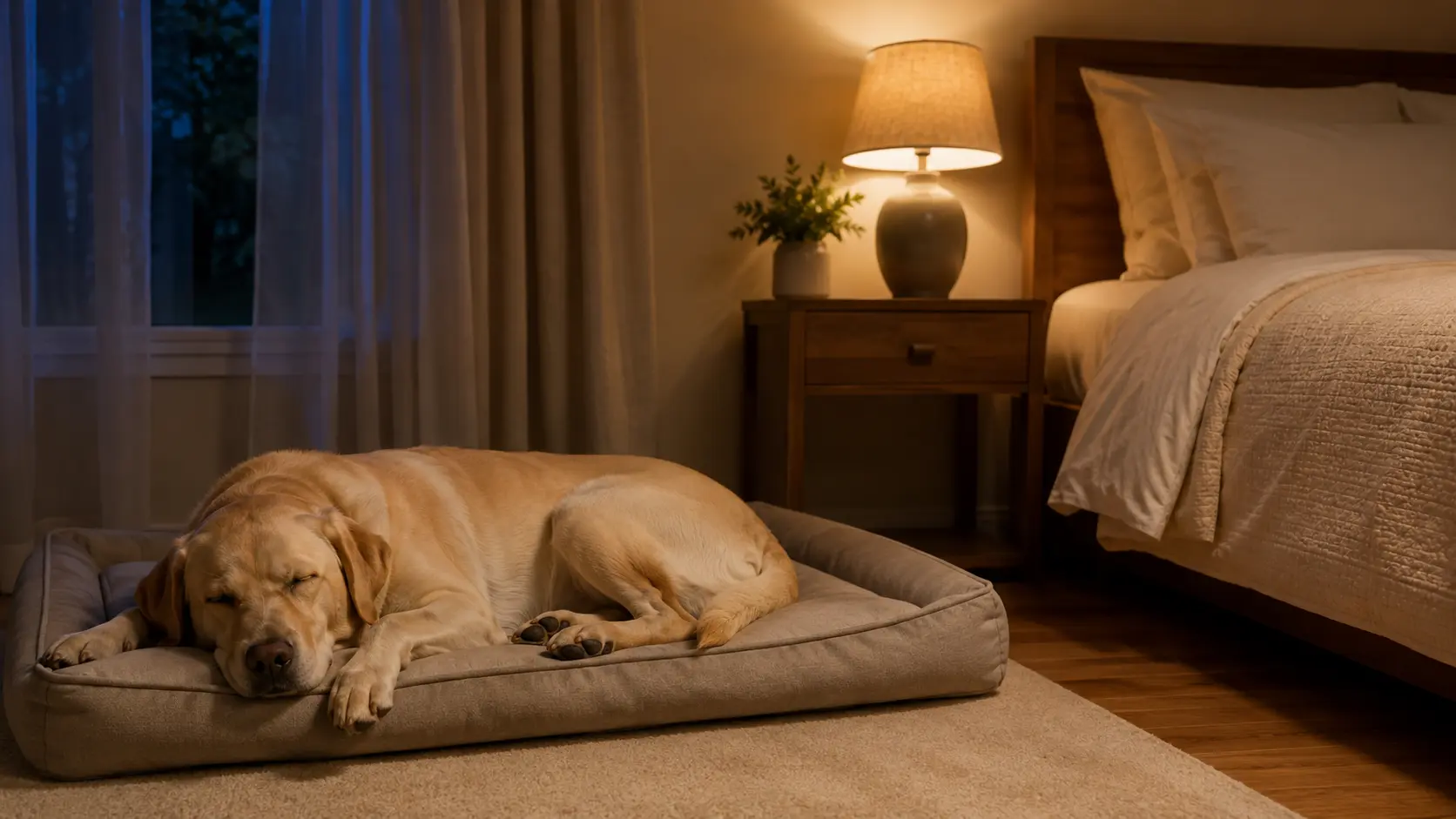
Direct Answer: Using white noise for dogs to sleep can help when rest is broken by unpredictable sounds like traffic, doors, or barking, because a steady background layer makes those noises less distinct. It won't fix restlessness caused by pain, illness, or age-related changes, and it works best alongside a supportive orthopedic or nesting donut bed.
These three products address three different reasons a dog may struggle to rest: insufficient physical support, a preference for soft nesting comfort, and sleep interrupted by outside noise.
Best for orthopedic support: Bedsure Orthopedic Dog Bed for Medium Dogs — a memory-foam bed designed to support the joints and spine, with a removable, washable cover for easier daily care. Check Current Price on Amazon →
Affiliate link: as an Amazon Associate, Pawful Dreams earns from qualifying purchases.
Best for small dogs who like to curl up: JOLLYVOGUE Calming Donut Dog Bed — an ultra-soft round cuddler bed designed for nesting and a more enclosed sleeping position. Check Current Price on Amazon →
Affiliate link: as an Amazon Associate, Pawful Dreams earns from qualifying purchases.
Best for masking outside noise: Adaptive Sound Technologies LectroFan Classic — a manufacturer-described non-looping white-noise machine that may help some dogs by masking traffic, hallway noise, barking, and other environmental disruptions. Sound masking is a practical management step, not a medical treatment. Check Current Price on Amazon →
Affiliate link: as an Amazon Associate, Pawful Dreams earns from qualifying purchases.
Dog Sleep Products Compared
| Option | Best For | Main Limitation | Our Take |
|---|---|---|---|
| Bedsure Orthopedic Dog Bed for Medium Dogs | Medium dogs, senior dogs, and dogs who benefit from extra joint and spine support | Correct sizing and foam support must match the dog | Our top orthopedic pick, with memory-foam support and a removable, washable cover |
| JOLLYVOGUE Calming Donut Dog Bed | Small dogs who like to curl up, nest, and sleep against raised edges | Not a substitute for orthopedic support | Our top cozy comfort pick for dogs who prefer a soft, enclosed sleeping shape |
| LectroFan Classic | Masking traffic, hallway noise, barking, and other external disruptions | Does not address pain or the underlying cause of anxiety | Our top sound-masking pick because it produces non-looping fan and white-noise options |
| Calming music | Dogs who already settle well with familiar background audio | Does not mask noise as consistently as a dedicated white-noise machine | An optional routine cue, but not the focus of this guide or a replacement for the right bed and environment |
Prices and availability change. Always confirm current details at checkout before you buy.
First: Is This Restlessness, or Something to Flag for Your Vet?
Not every disrupted night is anxiety. Before changing the sleep setup, consider whether pain, illness, medication effects, temperature, toileting needs, or age-related cognitive changes could be involved. In senior dogs, nighttime wandering, pacing, disorientation, changes in the sleep-wake cycle, or new house-soiling can be signs of canine cognitive dysfunction, but these symptoms can also overlap with other medical conditions. A dog who will not sleep and is panting without an obvious reason needs veterinary assessment, not simply a new bed or sound machine.
| What You're Seeing | Possible Explanation | What to Do |
|---|---|---|
| Occasional restlessness followed by settling within a few minutes | A minor noise, a warm room, or a temporary change in routine | Check the room, temperature, sleeping surface, and recent routine changes |
| Repeated repositioning but calm behavior once comfortable | The bed may be too small, too warm, too soft, too firm, or insufficiently supportive | Review bed size, sleeping style, and whether orthopedic support may be appropriate |
| Waking in response to traffic, hallway activity, barking, or household sounds | Unpredictable environmental noise may be interrupting sleep | Reduce the trigger where possible and consider steady sound masking |
| Persistent nighttime panting without obvious heat or exertion, especially in an older dog | Pain, joint discomfort, illness, or another medical issue may be involved | Contact your veterinarian before treating it as a behavioral problem |
| A sudden change in a dog who previously slept normally | A new medical, environmental, or age-related factor may be present | Arrange a veterinary check, particularly if other symptoms are present |
Seek veterinary advice if the change is sudden, worsening, or accompanied by panting, vocalizing, reduced appetite, mobility changes, confusion, repeated toileting, or other unusual behavior.
Sources: Cornell Riney Canine Health Center: Recognizing Pain in Dogs; Cornell Riney Canine Health Center: Cognitive Dysfunction Syndrome; VCA: Senior Pet Cognitive Dysfunction.
Why Dogs Struggle to Sleep or Stay Asleep
A dog may have difficulty resting for more than one reason. Identifying the pattern helps you choose an appropriate change instead of expecting one product to solve every form of nighttime disruption.
Physical Discomfort
Dogs who repeatedly change position, avoid a previously used bed, or appear stiff when getting up may need a more suitable sleeping surface. Senior dogs and dogs with mobility concerns may benefit from supportive foam, but new or persistent discomfort should still be discussed with a veterinarian.
Sleeping-Position Preference
Some dogs stretch out and need a flat, spacious surface. Others naturally curl into a tight shape or rest against an edge. A donut bed can suit a small dog that prefers to nest, while a flatter orthopedic bed may better suit a dog that needs room and firmer support.
Environmental Noise
Traffic, neighbors, doors, voices, barking, appliances, and early-morning household activity can repeatedly interrupt rest. White noise can reduce the contrast between a quiet room and sudden background sounds, making individual noises less noticeable. It does not remove the source or treat anxiety, but it can make the sound environment more consistent.
Room and Routine
Light, temperature, drafts, foot traffic, and an unpredictable bedtime routine can all affect rest. Place the bed in a quiet area where the dog can relax without being isolated from the household. Keep access to water and toileting appropriate for the dog's age and health.
How to Choose the Right Dog Bed for Better Rest
Choose Orthopedic Support When Comfort Is the Main Problem
- Look for enough usable sleeping space. Measure your dog in a natural resting position and compare that measurement with the bed's internal dimensions.
- Consider foam support. A supportive foam base is more suitable than loose filling when the goal is to reduce pressure on joints and provide a stable surface.
- Check ease of cleaning. A removable, washable cover makes regular use easier to maintain.
- Watch how your dog gets up. A very high edge or deeply sinking surface may be difficult for a dog with limited mobility.
- Do not treat a bed as medical care. A supportive bed may improve comfort, but it cannot diagnose or treat arthritis, pain, or another condition.
Choose a Donut Bed When Nesting Is the Main Preference
- Match it to the dog's natural sleeping shape. Donut beds work best for dogs who curl up rather than stretch out.
- Check the inner sleeping area. The advertised outer diameter includes the raised rim, so the usable center is smaller.
- Consider heat. Thick plush material can feel cozy but may be too warm for some dogs or seasons.
- Skip soft bedding for destructive chewers. Dogs who tear or ingest fabric or filling need a safer setup.
- Do not confuse softness with orthopedic support. Plush nesting comfort and joint support solve different problems.
White Noise for Dogs: When It May Help
White noise is most useful when a dog's sleep is interrupted by inconsistent sounds from outside the room. A steady background layer can make passing cars, doors, conversations, barking, and similar noises less distinct.
A dedicated non-looping sound machine can be more consistent than a short audio track that repeats with noticeable gaps. The LectroFan Classic offers multiple fan sounds and white-noise variations, allowing you to choose a neutral sound that sits quietly in the background.
How to Use White Noise Safely
- Start at a low, comfortable volume. It should soften background disruptions, not dominate the room.
- Place the machine away from the dog's head and bed. Avoid directing a speaker toward the dog at close range.
- Keep an escape route. The dog should be able to move to a quieter area rather than being confined beside the sound.
- Test different sound options. Stop using any setting that appears to make the dog more alert, restless, or avoidant.
- Address the trigger where possible. Curtains, distance from windows, moving the bed, or reducing household noise may help alongside sound masking.
White noise is not a treatment for pain, cognitive changes, separation anxiety, or noise phobia. If your dog shows panic, persistent distress, or a sudden change in sleep, discuss the pattern with your veterinarian or a qualified behavior professional.
A Simple Dog Sleep Setup
- Identify the main disruption. Look for a pattern involving discomfort, sleeping position, outside noise, room conditions, or changes in health.
- Choose the correct bed type. Use a supportive orthopedic surface for dogs that need stability and cushioning, or a correctly sized donut bed for a small dog that prefers to curl and nest.
- Place the bed thoughtfully. Choose a low-traffic area away from drafts, bright light, and the most disruptive household or street noise.
- Add white noise only when sound is part of the problem. Use a comfortable volume and observe whether the dog settles more easily.
- Keep the wind-down routine predictable. Use the same general sequence for toileting, lighting, household activity, and bedtime.
- Reassess the result. If the dog remains restless or develops new symptoms, do not keep adding products without investigating the cause.
When Nighttime Restlessness Keeps Continuing
A better bed and steadier sound environment can help when physical comfort or environmental disruption is the problem. They are less likely to help if the dog is in pain, needs to toilet more often, is overheating, is experiencing age-related cognitive changes, or is distressed by being alone.
If you have already improved the room and routine but your dog still cannot settle, keep a short record of when the behavior begins, what the dog does, how long it lasts, and what else has changed. That information can help your veterinarian distinguish an environmental sleep problem from a medical or behavioral issue.
Sources: Merck Veterinary Manual: Behavior Problems of Dogs; Cornell Riney Canine Health Center: Anxious Behavior in Dogs.
Individual Reviews
Bedsure Orthopedic Dog Bed for Medium Dogs
Verdict: A memory-foam dog bed designed to provide supportive cushioning for the joints and spine. The removable, washable cover makes it practical for regular use in a bedroom, crate, or quiet resting area.
Pros:
- Memory-foam support
- Useful for dogs who benefit from extra joint and spine cushioning
- Removable, washable cover
- Suitable as a regular sleeping bed or inside a correctly sized crate
Cons:
- The selected size must match the dog and available space
- Not suitable for dogs who actively chew or destroy bedding when left alone
Who it's for: Medium dogs, senior dogs, and dogs who need a more supportive sleeping surface.
Check Current Price on Amazon →
Affiliate link: as an Amazon Associate, Pawful Dreams earns from qualifying purchases.
JOLLYVOGUE Calming Donut Dog Bed
Verdict: An ultra-soft round cuddler bed made for small dogs who prefer to curl up, burrow, or rest against raised edges. Its main strength is cozy nesting comfort rather than orthopedic support.
Pros:
- Soft, plush sleeping surface
- Round donut shape supports curling and nesting behavior
- Raised edge can give small dogs a more enclosed resting position
Cons:
- Not an orthopedic bed for dogs with joint or spine problems
- Not suitable for dogs who chew or destroy soft bedding
- Correct sizing matters so the dog can rest comfortably
Who it's for: Small dogs who naturally sleep curled up and prefer a soft, cozy bed with raised sides.
Check Current Price on Amazon →
Affiliate link: as an Amazon Associate, Pawful Dreams earns from qualifying purchases.
Adaptive Sound Technologies LectroFan Classic
Verdict: A non-looping sound machine that offers fan sounds and white-noise variations for masking unpredictable background noise. It is most useful when traffic, hallway activity, barking, or household sounds repeatedly interrupt a dog's rest.
Pros:
- Non-looping sound generation avoids obvious repeating tracks
- Multiple fan and white-noise options
- Can mask common external disruptions
- Adjustable volume
Cons:
- It does not treat the underlying cause of anxiety or nighttime restlessness
- It should not be placed directly beside the dog or played too loudly
- Some dogs may rest better in a quieter room rather than with added sound
Who it's for: Dogs whose sleep is interrupted by inconsistent environmental noise and owners who want a steady sound-masking option.
Check Current Price on Amazon →
Affiliate link: as an Amazon Associate, Pawful Dreams earns from qualifying purchases.
Also Consider / Who Should Skip These Products
Also consider: If your dog's restlessness is tied to thunderstorms, fireworks, or another specific noise event, start with our SOS fireworks and storm guide. A bed upgrade or white-noise machine will not resolve an active panic response on its own.
Skip the product-first approach: If nighttime panting is new, sudden, worsening, or paired with changes in appetite, weight, mobility, toileting, or awareness, speak with your veterinarian first. No bed or sound machine substitutes for ruling out pain or an underlying medical condition.
Why Trust This Guide
This guide separates three commonly confused needs: orthopedic support, nesting comfort, and environmental sound masking. It does not present a bed or white-noise machine as a medical treatment or a universal anxiety solution. Product features, limitations, sleeping styles, safety considerations, and the need for veterinary assessment are considered together so you can choose based on the actual cause of disrupted rest.
Frequently Asked Questions
What type of dog bed is best for better sleep? The best type depends on how your dog sleeps and whether physical support is needed. A correctly sized orthopedic foam bed may suit senior dogs, medium-to-large dogs, or dogs that benefit from a stable supportive surface. A donut bed is better suited to a small dog that naturally curls up and prefers soft raised edges. Persistent discomfort or a sudden change in sleeping position should be discussed with your veterinarian.
Does white noise help dogs sleep? White noise may help when traffic, voices, doors, barking, or other inconsistent sounds repeatedly interrupt a dog's rest. It makes the background sound more even, but it does not treat pain, anxiety, or another underlying cause. Keep the volume comfortable, place the machine away from the dog's head, and stop if the dog appears unsettled by it.
Is an orthopedic dog bed better than a donut bed? Neither type is universally better because they serve different needs. Orthopedic foam provides a flatter, more supportive surface for the body and joints. A donut bed provides soft nesting comfort for dogs that like to curl up against raised sides. A plush donut bed should not be treated as a substitute for orthopedic support.
Why is my dog panting and pacing instead of sleeping at night? Nighttime panting and pacing can be linked to heat, pain, illness, toileting needs, medication effects, anxiety, or age-related changes. If the behavior is new, persistent, or worsening, contact your veterinarian before assuming that a different bed or background sound will solve it.