Pawful Dreams may earn a commission when you buy through links on this page, at no extra cost to you. Please read our Affiliate Disclosure for more information.
Last updated: September 2026
Quick Verdict
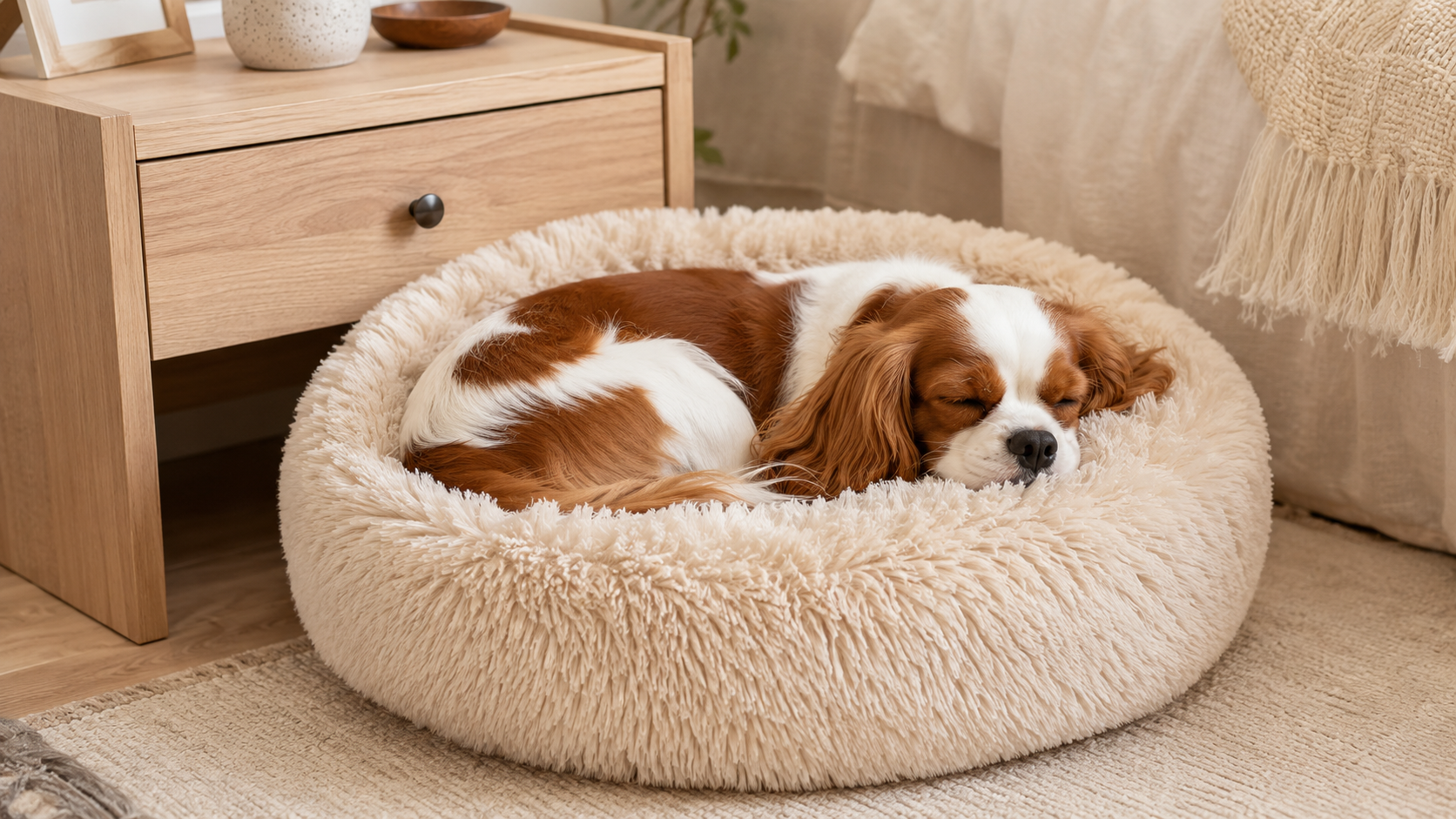
Direct Answer: According to the manufacturer's product listing, the JOLLYVOGUE calming donut dog bed has a raised plush bolster ring and is intended for curl-up nesting. Pawful Dreams considers it a cozy option for non-chewing dogs, but it is not a substitute for therapeutic orthopedic support or veterinary care for joint pain.
A donut bed for dogs like this one provides den-style comfort and helps dogs settle through its raised bolster design — but the "orthopedic" label oversells it. It's a security blanket, not joint support. Great for non-chewing nesters; a fast, expensive mistake for puppies or destructive chewers.
Check Current Price on Amazon →
Who It Is For
A calming dog bed in this donut-style format appeals to dogs that prefer curling up against a raised bolster edge. If your dog naturally nests into corners, pushes into couch cushions, or seems to seek out enclosed spaces when stressed, this format tends to land well — it's less about joint support and more about a sense of physical security.
It's a good fit for adult dogs, non-chewers, and owners specifically prioritizing anxiety comfort over medical-grade support. If you're comparing a donut dog bed with removable cover against a flat orthopedic mat, understand you're choosing between two different jobs: this bed provides comfort through enclosure, an orthopedic mat supports through cushioning.
Main Features
- Raised bolster ring — the defining feature of the donut shape, designed to mimic a den environment and give anxious dogs something to curl into and rest their head against
- Plush, faux-fur-style fabric — soft texture intended to feel comforting against the skin, especially for dogs that like to burrow
- Removable cover — most sizes include a zip-off cover for washing, separate from the interior cushion fill
- Multiple size options — sized from small to large, though sizing accuracy has been an inconsistent point across the donut-bed category broadly
- Lightweight, portable construction — easy to move between rooms or reposition compared to bulkier orthopedic mattress-style beds
Pros & Cons
| Pros | Cons |
|---|---|
| The raised-edge "den" design genuinely helps some anxious dogs settle and self-soothe | Center cushion is frequently under-padded — feedback across this bed category describes it as "cushy" rather than genuinely orthopedic |
| Soft, comforting texture that most dogs take to quickly | Bolster padding can be uneven, with some reviewers reporting hard, underfilled lumps within the bolster ring |
| Removable cover adds a layer of washability | Puppies and chewers treat the plush stuffing as a chew toy — torn beds and scattered stuffing are a very common complaint |
| Compact and easy to reposition around the house | Sizing has run inconsistent — one buyer's "medium" measured noticeably smaller and more oval than advertised |
| Reasonably priced entry point into calming bed formats | Larger sizes frequently don't fit in a standard washing machine despite "machine washable" marketing |
Reality check that matters: treat any anti anxiety bed for dogs in this donut format as a comfort and security product first — not a therapeutic joint-support bed. If your dog has diagnosed arthritis or joint pain, this shouldn't be your only bed; pair it with (or replace it with) a true orthopedic foam mattress for the actual support layer.
Who Should Skip It
Skip this if your dog is a puppy, still teething, or a documented chewer of any age. This is one of the most consistent complaint patterns in the entire donut-bed category — plush stuffing gets treated as a toy, beds get torn open within days or weeks, and even owners who bought a second, larger replacement bed report the exact same outcome. This isn't a brand-specific flaw; it's a structural risk with this bed type, so a heavy chewer needs a different product entirely.
Also skip it if you're buying specifically for joint or arthritis support — the center cushion in this category is consistently under-padded relative to the "orthopedic" marketing language, so a dog with real mobility issues needs a purpose-built orthopedic foam bed instead. And if a large-capacity standard washing machine is a hard requirement for you, check the specific size and care tag closely before buying — full-bed washability at larger sizes is inconsistent, and some care tags specify front-loading machines only.
Head-to-Head Comparison
| Factor | JOLLYVOGUE Donut Bed | Bedsure Orthopedic Bed (Flat Style) |
|---|---|---|
| Primary benefit | Den-style security, anxiety comfort | Joint pressure relief, orthopedic support |
| Chew resistance | Low — stuffing is a common chew target | Moderate — foam interior less appealing to chew, though covers can still tear |
| Best dog type | Nesters, curlers, anxious non-chewers | Dogs needing pressure relief, seniors, larger breeds |
| Washability | Cover typically removable; large sizes may not fit standard washers | Cover removable and washable; foam stays out of the machine |
| Best for | Comfort-and-security-first households | Support-and-durability-first households |
Safety / Veterinary Guardrail
If your dog tears into this bed and ingests any stuffing or fabric, that's a genuine choking and intestinal blockage risk — not a minor mess. Supervise a new dog's first extended use, and if you notice any tearing, remove and replace the bed immediately rather than letting your dog continue to access exposed stuffing. If you suspect your dog has swallowed stuffing or fabric — signs include vomiting, lethargy, loss of appetite, or straining without producing stool — treat this as an urgent situation and contact your veterinarian right away rather than waiting to see if it passes on its own.
For dogs with diagnosed anxiety disorders beyond general nesting comfort — panic, destructive behavior, or self-injury when distressed — a calming bed is a helpful environmental piece, not a treatment. Talk to your veterinarian or a board-certified veterinary behaviorist about a fuller plan if the anxiety persists regardless of environment.
Frequently Asked Questions
Is the JOLLYVOGUE donut bed good for dogs with joint pain?
Not primarily — the center cushion is consistently under-padded relative to the "orthopedic" marketing language, so dogs with real mobility issues need a purpose-built orthopedic foam bed instead.
Is this bed safe for puppies or chewers?
No, plush stuffing gets treated as a toy by puppies and chewers, and beds commonly get torn open within days or weeks.
Is the cover removable and washable?
Most sizes include a zip-off cover for washing, though larger sizes frequently don't fit in a standard washing machine despite "machine washable" marketing.
What kind of dog does this bed suit best?
Adult non-chewing dogs that naturally nest or curl against a raised edge — it's built for anxiety comfort through enclosure, not medical-grade joint support.