Everyday Dog Care & Practical Essentials Guide
A practical, evidence-based system for the small daily habits — dental care, paw hygiene, digestion, waste management, and a predictable routine — that add up to a calmer, healthier dog over months and years.
Pawful Dreams may earn a commission when you buy through links on this page, at no extra cost to you. Please read our Affiliate Disclosure for more information.
Last updated: September 2026
Why Small Daily Habits Matter More Than Occasional Effort
Dog owners often put their energy into the big-ticket health decisions — the food brand, the vet, the pet insurance plan — while underestimating how much the small, repeatable stuff shapes a dog's comfort and long-term health. Several of the most common problems dogs face are tied directly to what happens, or doesn't happen, every single day.
Dental Health Is a Daily, Not Occasional, Concern
Periodontal disease is the most common health condition diagnosed in dogs. Research cited by Cornell University's Riney Canine Health Center shows that 80–90% of dogs over age three have some degree of periodontal disease, with smaller breeds affected earlier and more severely. The American Veterinary Dental College's findings, as reported by the AKC, similarly note that at least 80% of dogs over three show signs of the disease, with prevalence climbing regardless of breed.
This matters well beyond the mouth. The American Kennel Club notes that untreated dental disease lets bacteria enter the bloodstream, where it can contribute to problems affecting the heart, kidneys, and liver — making daily oral care a whole-body issue, not a cosmetic one. Plaque forms constantly and is unavoidable; left alone, it hardens into tartar within days, leading to gum inflammation, bad breath, loose teeth, and painful abscesses. The AKC is explicit that human toothpaste should never be used on a dog, since it commonly contains xylitol — a sweetener that's toxic to dogs and can cause dangerously low blood sugar or death if ingested.
Because plaque reforms daily, dental care is one of the clearest examples of why consistency beats intensity: brushing for two minutes several times a week, or routinely using dental chews, wipes, or vet-approved dental water additives, does more for long-term oral health than an occasional deep clean.
Paw Hygiene Protects Against More Than Dirt
A dog's paws are in constant contact with surfaces that carry bacteria, allergens, and chemical residue. According to VEG ER for Pets, common ice-melt products contain sodium chloride, calcium chloride, magnesium chloride, and urea-based compounds that can dry out and crack paw pads, cause chemical burns, and — if licked off — trigger drooling, vomiting, or tremors. Even outside winter, paws pick up lawn-care chemicals, pollen, and general grime that a dog then tracks indoors or ingests while grooming.
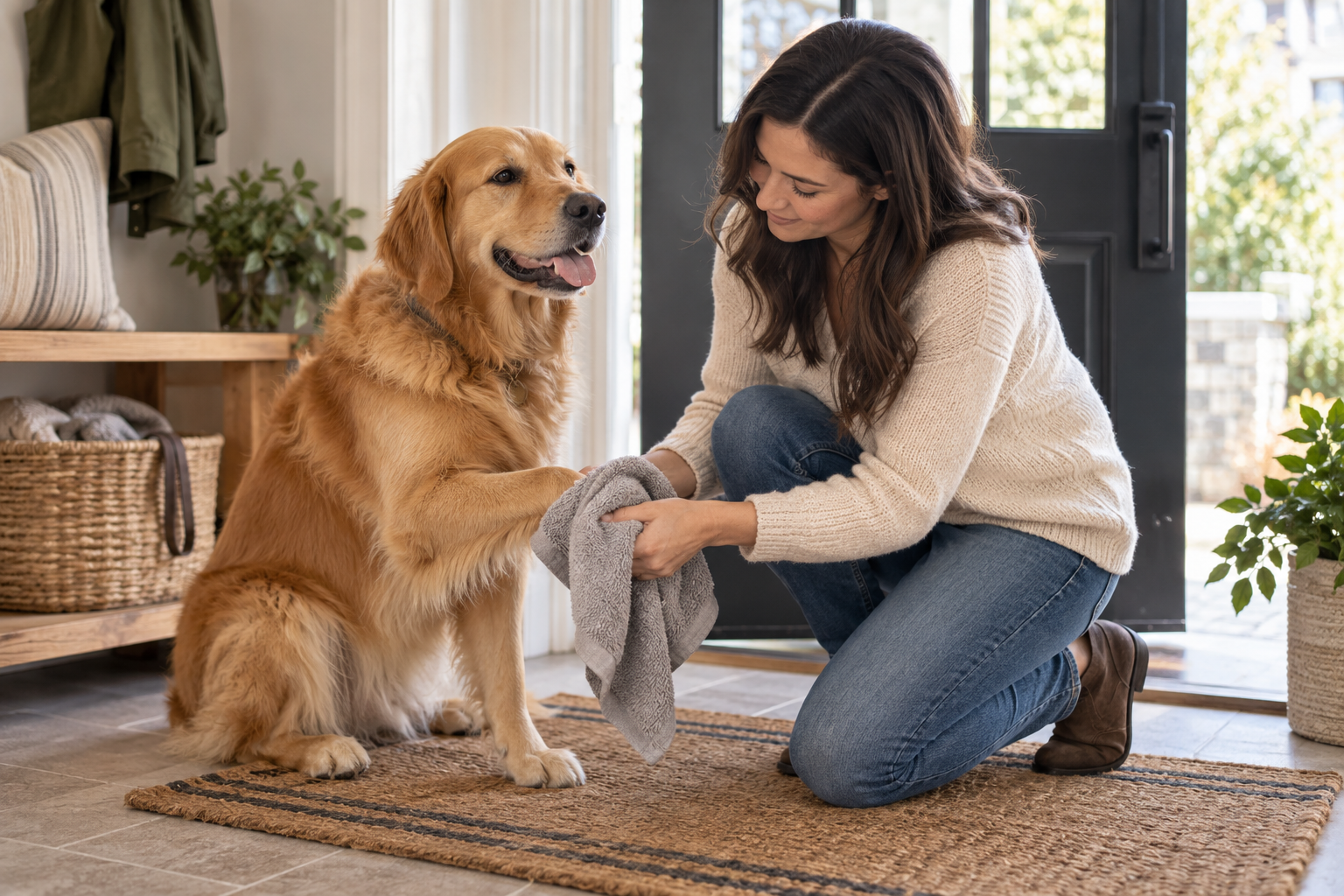
Veterinary guidance consistently recommends rinsing and drying paws after walks, using pet-safe wipes when a full rinse isn't practical, and watching for irritation such as limping, redness, or excessive licking between the toes. Paw balms and protective booties can add a barrier in harsh weather, but the daily wipe-down remains the single most reliable habit for preventing irritation and limiting what a dog ultimately ingests through licking.
Digestive Support and Probiotics
The digestive tract is closely tied to overall wellness, and veterinary interest in probiotic support for dogs has grown accordingly. Cornell's Riney Canine Health Center explains that probiotics work by normalizing intestinal acidity and releasing short-chain fatty acids, which helps competitively limit harmful bacteria such as Salmonella while supporting normal immune function. Cornell nutrition faculty note that daily probiotic use is common for long-term digestive health, and that probiotics can also be started proactively a few days before a known stressor — boarding or travel, for example — to help the gut stay balanced through the disruption.
The evidence base is nuanced but encouraging. A review published in the Journal of the American Veterinary Medical Association found probiotics show no major negative effects in healthy animals and offer substantial evidence for reducing stress-induced diarrhea, though evidence for chronic conditions like inflammatory bowel disease remains inconclusive. Cornell recommends looking for products that list an expiration date, the exact bacterial species, and a guaranteed live-organism count, since quality varies significantly between commercial products — and advises that severely immunocompromised dogs should only receive probiotics under veterinary supervision.
Waste Management Is a Public and Personal Health Issue
Picking up after a dog is often treated as a courtesy, but it's fundamentally a disease-prevention measure. Dog feces can carry whipworms, hookworms, roundworms, tapeworms, Salmonella, E. coli, parvovirus, and giardia — all transmissible to other animals and, in several cases, to humans, according to Chewy's veterinary-reviewed guidance, which cites the Centers for Disease Control and Prevention. Uncollected waste also washes into storm drains during rain or snowmelt, contributing to water pollution.
The ASPCA's general dog-care guidance is direct on this point: dogs should be leashed or kept in secured areas outdoors, and any waste left on a neighbor's lawn, the sidewalk, or any public space should be cleaned up immediately. Practically, that means keeping waste bags accessible at all times — not just for planned walks, but for quick yard trips — and carrying a few extra in case a bag tears or a larger dog produces more waste than expected.
Indoor Accident Management
Even well-trained dogs have accidents — during illness, aging, extreme weather, or long owner absences. Rather than treating this as a training failure, veterinary and behavior sources recommend planning for it as part of a realistic daily-care routine: keeping absorbent pads or an indoor turf system available, using enzymatic cleaners that fully break down odor-causing compounds (standard cleaners can leave residual scent that encourages a dog to re-mark the same spot), and having a designated indoor relief area for puppies, senior dogs, or dogs recovering from surgery. This isn't a substitute for house-training — it's a practical safety net that reduces stress for both dog and owner when accidents happen.
How a Consistent Routine Lowers a Dog's Baseline Stress
Beyond individual hygiene tasks, the structure and predictability of a dog's day has a measurable effect on their emotional baseline. Dogs don't experience uncertainty the way people often do — their nervous systems are pattern-oriented, and unpredictability in feeding, walks, or attention can create a persistent, low-grade stress state rather than an obvious crisis. It's the same underlying mechanism we cover in more depth in our Dog Fears & Anxiety SOS guide, just showing up as a quiet daily hum instead of a storm-night panic.
According to behavioral research summarized by iPupPee, the absence of a structured daily routine can push a dog into constant low-grade anxiety that quietly fuels barking, destructive chewing, restlessness, and even physical health problems over time. When a dog can reliably predict what happens next — breakfast, a walk, bedtime — that predictability functions as a form of psychological safety. It's described as directly tied to reduced cortisol spikes and improved baseline behavior, with puppies, senior dogs, and anxious or service dogs benefiting most from predictable structure. This is exactly why routine matters so much in our Separation Anxiety & Daily Management guide too — a predictable departure routine is one of the most effective tools for lowering a dog's distress when you're not home.
This is precisely why the daily-care habits in this guide matter as much for emotional wellbeing as for physical hygiene. A consistent sequence — morning walk and paw wipe-down, a dental care moment, regular feeding times with any digestive support, and a wind-down routine — gives a dog the same "things are safe" signal that predictable sleep and meal schedules give humans. Hygiene routines in particular double as calm, low-stimulation bonding moments: a dog used to having their teeth brushed or paws checked daily tends to tolerate handling far better than one who only experiences it occasionally or during a stressful vet visit.
The Practical Daily Care Checklist
The table below organizes daily and near-daily tasks by category. Frequency can be adjusted based on a dog's age, breed, coat type, and any existing health conditions — always in consultation with a veterinarian.
| Category | Task | Suggested Frequency | Key Consideration |
|---|---|---|---|
| Waste management | Carry and use waste bags on every outing | Every walk/outdoor trip | Keep spares on hand for tears or larger volumes |
| Paw care | Rinse or wipe paws after walks | Daily, especially after rain, snow, or chemical exposure | Watch for cracking, redness, or excessive licking between toes |
| Dental health | Brush teeth or use dental chews/wipes | Several times weekly (ideally daily) | Never use human toothpaste — xylitol is toxic to dogs |
| Digestive support | Feed a balanced diet; consider vet-approved probiotics | Daily, or proactively before known stressors | Choose products with a guaranteed live-organism count |
| Indoor accident management | Keep absorbent pads/enzymatic cleaner accessible | As needed; always available for puppies/seniors | Enzymatic cleaners fully break down odor to prevent re-marking |
| Grooming | Brush coat; check for fleas/ticks in warm weather | Brushing: several times weekly; parasite checks: daily in season | Reduces shedding and catches skin issues early |
| Food & water hygiene | Wash bowls; provide fresh water | Daily | Prevents bacterial buildup in dishes |
| Bedding | Wash bedding; keep resting area draft-free | Weekly, or as needed | Supports skin health and reduces allergen buildup |
Choosing Daily Essentials Safely
- Check formulation, not just marketing claims. Dental products, probiotics, and grooming wipes should be formulated specifically for dogs. Human products — especially toothpaste — can contain ingredients that are safe for people but toxic to dogs.
- Look for transparency in supplement labeling. For probiotics, Cornell recommends checking for an expiration date, the exact bacterial species used, and a guaranteed count of live organisms (measured in CFUs) — vague labeling is a warning sign.
- Match products to your dog's size and life stage. Puppies, seniors, and toy breeds often need gentler tools (finger toothbrushes, softer wipes) and different dosing than adult medium or large dogs — the same reasoning behind our Breed & Age-Specific Anxiety guide.
- Introduce new products gradually. Whether it's a new probiotic, dental chew, or paw balm, introduce one new item at a time and monitor for digestive upset, irritation, or allergic reaction before adding another.
- Keep emergency contacts accessible. The ASPCA Animal Poison Control Center operates a 24-hour line at (888) 426-4435 for suspected ingestion of toxic substances, including de-icing chemicals or human dental products.
Building the Routine: A Sample Daily Flow
A simple way to translate this checklist into practice is to anchor hygiene and care tasks to events that already happen every day, rather than treating them as separate chores:
- Morning walk return: Wipe or rinse paws immediately at the door, before your dog settles onto furniture or bedding.
- After breakfast: A natural moment for a probiotic (if recommended by your veterinarian) or a dental chew, since it pairs with a routine your dog already expects.
- Midday or after outdoor play: A quick check for ticks, burrs, or paw irritation, especially in warm months.
- Evening wind-down: Teeth brushing (or an alternative dental care step) fits well into a calm bedtime routine — the same predictability we lean on in our Sleep & Rest Disruption guide.
- Weekly: Bedding wash, a more thorough grooming session, and a general body check for new lumps, skin changes, or signs of discomfort.
Anchoring tasks to routines you already have — rather than trying to remember them independently — is what makes daily care sustainable long-term, and it reinforces the same predictability that keeps a dog's stress baseline low.
Safety & Veterinary Guardrail
The information in this guide is intended for general educational purposes and reflects publicly available veterinary and canine health guidance. Daily care products and routines — including dental care items, paw hygiene practices, probiotics, waste management supplies, and indoor accident management tools — are designed to support everyday hygiene, comfort, and routine wellness. They are not a substitute for professional veterinary diagnosis, treatment, or advice.
Any signs of persistent illness, pain, behavioral change, bleeding gums, unusual stool, skin irritation that doesn't resolve, or suspected ingestion of a toxic substance should be evaluated by a licensed veterinarian promptly. Supplements such as probiotics should be introduced in consultation with a veterinarian, particularly for puppies, senior dogs, pregnant or nursing dogs, or dogs with existing health conditions or compromised immune systems.
Sources: Cornell Riney Canine Health Center; American Kennel Club (AKC); American Veterinary Dental College; VEG ER for Pets; Journal of the American Veterinary Medical Association (JAVMA); Chewy veterinary-reviewed guidance citing the CDC; ASPCA.
Frequently Asked Questions
How often should I actually brush my dog's teeth?
Several times a week at minimum, ideally daily — plaque reforms constantly, so consistency matters more than any single deep clean. Never use human toothpaste; it commonly contains xylitol, which is toxic to dogs.
Does every dog need a daily probiotic?
Not necessarily, but Cornell notes daily use is common for long-term digestive support, and starting a probiotic proactively a few days before a known stressor — travel or boarding, for example — can help keep digestion steady through the disruption. Severely immunocompromised dogs should only be given probiotics under veterinary supervision.
What's the fastest way to stop indoor accidents from becoming a bigger problem?
Clean the spot immediately with an enzymatic cleaner — standard cleaners can leave a residual scent that encourages a dog to re-mark the same spot — and keep a designated indoor relief area available for puppies, seniors, or dogs recovering from surgery. It's a management step, not a sign that house-training has failed.
Do I really need to wipe my dog's paws after every single walk?
It's the single most reliable habit for preventing irritation, especially after rain, snow, or chemical exposure such as ice-melt or lawn treatments. Watch for cracking, redness, or excessive licking between the toes as signs it's overdue.
Related Guides
Everyday care habits work best alongside the rest of Pawful Dreams' anxiety-management system:
- Dog Fears & Anxiety SOS — for acute, in-the-moment panic during storms and fireworks.
- Dog Separation Anxiety & Daily Management — for the structural, routine-based side of separation anxiety.
- Dog Sleep & Rest Disruption — for dogs who won't settle or wake repeatedly through the night.
- Breed & Age-Specific Dog Anxiety — for anxiety patterns that differ by breed background and life stage.