Best Dog Crate for Separation Anxiety: A Practical Daily-Management Guide
Fireworks night is a one-time event. A dog who panics every single time you grab your keys is a daily problem — and it needs a daily system, not a one-off fix. Written from real experience by a dog owner managing everyday home anxiety.
Pawful Dreams may earn a commission when you buy through links on this page, at no extra cost to you. Please read our Affiliate Disclosure for more information.
Last updated: September 2026
The Real Problem This Page Solves
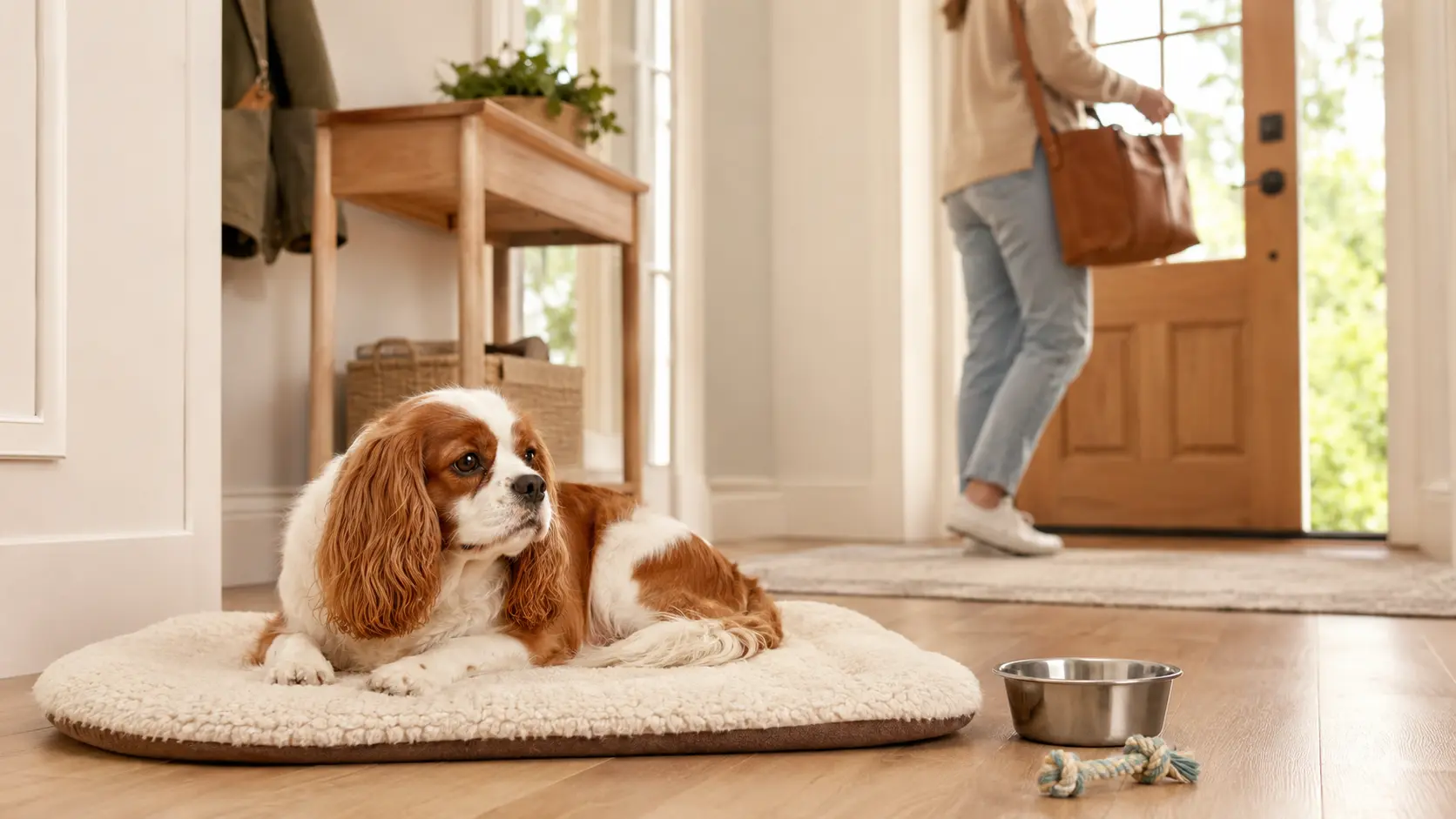
If you're here, it's probably not your dog's first bad night alone. Maybe it's the barking that's started drawing texts from a neighbor. Maybe it's the pacing at the door the second you pick up your keys. Maybe you've tried a crate before and it made things worse, not better.
This isn't an SOS page — there's no single event to get through tonight. This is about building a system your dog can rely on every single day you leave the house, so that "you leaving" stops being the scariest part of their day.
Quick Verdict
Direct Answer: A practical crate setup for separation anxiety combines a sturdy, correctly sized wire or plastic crate with gradual departure-cue desensitization. A crate may provide a resting space for dogs comfortable with confinement, but it is not a standalone treatment and can worsen distress in dogs that panic when confined. See guidance from the ASPCA and VCA Hospitals.
If one change is going to improve daily management, it is this: choose a crate that is secure, correctly sized, easy to clean, and introduced gradually as a calm resting space rather than used only when you leave.
Our top pick: MidWest Homes for Pets iCrate — a sturdy, foldable metal crate with secure latches, a divider panel for adjusting the usable space, and a removable tray for easier cleaning. Check Current Price on Amazon →
Best paired with: gradual crate introduction, departure-cue desensitization, and a predictable daily routine. The crate should support the training plan, not replace it.
Comparison Table
| Product | Best For | Price* | Our Take |
|---|---|---|---|
| MidWest Homes for Pets iCrate | Daily crate training, routine management, and dogs who need a sturdy, foldable metal crate | Check current price | Our top crate pick for practical home use, with secure latches, a divider panel, and a removable tray |
| Dog-safe room or gated area | Dogs with confinement distress who do not settle in a crate | Varies | A better option when crating increases panic instead of reducing it |
Prices and availability change — always confirm current details at checkout before you buy.
First, Diagnose It: Is This Actually Separation Anxiety?
Before you buy anything, rule out problems that can look similar. A crate does not treat separation anxiety on its own. It may provide a familiar resting space for a dog that already feels safe inside it, but it can worsen distress and cause injury when confinement triggers panic. Video monitoring can help you observe what happens after you leave and distinguish separation-related distress from confinement anxiety, boredom, outside triggers, or a house-training problem.
| If your dog... | It's probably... | The crate helps if... |
|---|---|---|
| Only acts out when truly alone — not when confined with you present | Possible separation-related distress | Only if your dog already rests calmly in the crate; crating is not a treatment by itself and may worsen distress in some dogs |
| Barks/chews mainly when under-exercised or unstimulated | Boredom | Only alongside more exercise and enrichment — the crate alone won't fix this |
| Has accidents specifically tied to schedule, not distress | House-training gap | Yes, as part of a routine — not an anxiety fix |
| Panics specifically about being confined, not about being alone | Confinement distress | No — a crate can make this worse; an anxious-dog-safe room may be a better start |
Dog Barking When Left Alone: Why the Eviction Fear Is Real
If part of what brought you here is a barking complaint — from a landlord, a neighbor, an HOA — you're not overreacting. This is one of the most common separation-anxiety threads in dog-owner communities, and the underlying fear isn't really about the barking itself. It's about losing housing over something that feels outside your control.
A few things that actually move this forward:
- Reducing visual and environmental triggers may reduce some barking. A crate, dog-safe room, covered window, or location away from doors and windows may help when outside activity is part of the trigger. A crate does not treat separation anxiety and should not be used if confinement increases distress.
- Departure cue desensitization matters more than the barking itself. If your dog escalates the second they hear keys or see shoes going on, the barking that follows is often the tail end of a panic response that started minutes earlier.
- A recording alone won't tell you the whole story. If you can, use a camera for several departures to observe when the behavior begins, how long it lasts, and whether it includes pacing, panting, drooling, destruction, escape attempts, or inability to settle. Share the recordings with your veterinarian or a qualified behavior professional if the pattern is persistent or severe.
Sources: ASPCA: Separation Anxiety; VCA: Barking in Dogs; VCA: To Crate or Not to Crate?.
Breaking the Departure Cue Cycle
Dogs are pattern-recognition machines, and most have mapped your exit routine perfectly: keys, shoes, bag, door. If your dog starts panicking the moment you pick up your keys — before you've even moved toward the door — the cue may have become a learned trigger associated with the actual leaving. ASPCA guidance describes gradual predeparture-cue work and very short absences as part of desensitization.
The fix trainers use most often is deliberately breaking the pattern:
- Pick up your keys. Don't leave. Put them down, sit back on the couch. Repeat throughout the day, unlinked from any departure.
- Put on your shoes. Don't leave. Same principle — walk around the house, take them back off.
- Touch the door handle. Don't leave. Build up to opening the door and closing it again without stepping out.
- Once each cue no longer triggers a reaction on its own, start combining them — but still don't leave every time.
- Introduce the crate into this same practice, so it becomes one more low-stakes part of the routine rather than the final, scariest step before you disappear.
This is slow, deliberate work — usually weeks, not days. The goal is to make keys, shoes, bags, and other pre-departure actions less reliable as signals that a stressful absence is about to begin. If your dog becomes distressed during practice, reduce the difficulty and discuss the plan with a veterinarian or qualified behavior professional.
Sources: ASPCA: Separation Anxiety; VCA: Separation Anxiety in Dogs.
How to Choose the Best Dog Crate for Separation Anxiety
What to Look For
- Secure latches and sturdy construction. A crate should close reliably and remain stable during normal use.
- Correct sizing. Your dog should be able to stand, turn around, and lie down comfortably without the crate feeling excessively large.
- Adjustable interior space. A divider panel is useful for puppies or growing dogs because it lets you change the available space over time.
- Easy cleaning. A removable tray and washable bedding make daily maintenance easier.
- Comfort without overheating. Choose bedding that supports your dog while still allowing enough room and airflow inside the crate.
Best For X
- Best practical metal crate: MidWest Homes for Pets iCrate
- Best complete daily setup: iCrate paired with gradual training, enrichment, and a predictable routine
- Best for dogs who panic specifically when confined: A dog-safe room or gated area rather than a crate
Individual Reviews
MidWest Homes for Pets iCrate
Verdict: A practical, foldable metal crate designed for everyday home use. Its secure latches, divider panel, and removable tray make it suitable for crate training, routine management, and creating a consistent resting space.
Pros:
- Sturdy metal construction
- Secure door latches
- Divider panel helps adjust the interior space
- Removable tray simplifies cleaning
- Folds for storage or transport
Cons:
- A wire crate does not create the same enclosed feel as a covered or solid-sided crate
- It is not appropriate for dogs who panic or injure themselves when confined
- Correct sizing and gradual introduction are essential
Who it's for: Owners who want a sturdy, functional crate for daily routines and dogs who can learn to rest comfortably in a wire crate.
Also Consider / Who Should Skip This
Also consider: A crate works best as one part of a broader routine that includes gradual alone-time training, departure-cue desensitization, exercise, enrichment, and a predictable resting setup. The iCrate can support that routine, but it does not treat separation anxiety on its own.
Who should skip a crate entirely: Dogs whose anxiety is specifically about confinement rather than being alone — for these dogs, a crate can escalate the panic rather than contain it. If your dog panics when confined even with you in the room, that's a conversation for a trainer or behaviorist before any crate purchase.
Medication Isn't Failing You — It's Not Meant to Work Alone
If your dog has been taking anxiety medication and progress has stalled or symptoms have changed, contact the prescribing veterinarian before changing the dose, schedule, or medication. A veterinarian may need to review the diagnosis, response, side effects, other health conditions, and whether the current behavior plan is appropriate.
Medication is often used together with behavior modification and management for separation anxiety. Structured desensitization, carefully controlled absences, and an environment in which the dog can remain safe are important parts of treatment. A crate should be included only if the dog already feels comfortable there and does not panic when confined.
Sources: Merck Veterinary Manual: Behavior Problems of Dogs; VCA: Separation Anxiety in Dogs.
Why Trust This Guide
This page draws on veterinary and behavioral sources (ASPCA's separation anxiety guidance, AKC's anxiety resources) alongside direct research into the most common daily-management questions owners ask on Reddit's r/Dogtraining and r/dogs communities. Product picks are based on practical features, daily usability, and fit for the specific use case. We update this page as products and pricing change.
Frequently Asked Questions
How do I stop my dog from barking for hours when I leave the house?
Use a camera to observe when the barking starts, how long it lasts, and whether it appears with pacing, panting, drooling, destruction, elimination, or escape attempts. Barking caused by separation-related distress needs a gradual behavior plan rather than punishment or simply containing the dog. A crate is appropriate only if your dog already relaxes inside it; use a dog-safe room or gated area if confinement increases panic. Persistent or severe distress should be discussed with a veterinarian or qualified behavior professional.
Sources: ASPCA: Separation Anxiety; VCA: To Crate or Not to Crate?.
My dog knows I'm about to leave — grabs keys, puts shoes on, starts panicking. How do I break this? This is departure-cue anxiety, and it's a trained response, which means it can be untrained the same way it was learned. Practice each cue (keys, shoes, door) in isolation, without following through on actually leaving, until each one stops triggering a reaction on its own. This is genuinely slow work — expect weeks, not days — but it directly targets the part of the routine your dog has learned to dread.
My dog has been on anxiety medication for months — why isn't it working anymore?
Do not assume that the medication has stopped working or change it without veterinary guidance. A change in symptoms or lack of progress can require a review of the diagnosis, dose, timing, side effects, other health conditions, and the behavior-modification plan. Separation-anxiety medication is commonly used alongside gradual desensitization and management, so contact the prescribing veterinarian to review the full treatment plan.
Sources: Merck Veterinary Manual: Behavior Problems of Dogs; VCA: Separation Anxiety in Dogs.