Pawful Dreams may earn a commission when you buy through links on this page, at no extra cost to you. Please read our Affiliate Disclosure for more information.
Last updated: September 2026
Quick Verdict
Direct Answer: According to the manufacturer's product listing, the PETSTA puzzle uses sliding pegs and food compartments for enrichment and slow-feeder-style use. Pawful Dreams considers it a practical option that may slow some fast eaters, but the plastic pieces are not presented as chew-proof; supervise use and skip it for heavy chewers or dogs that become distressed or guard food around puzzle feeders.
The petsta dog puzzle toy does double duty as a brain-building enrichment tool and a slow feeder that forces fast eaters to work for every bite. It can provide mental stimulation and slow mealtime pacing — but the sliding pieces and bone-shaped pegs aren't chew-proof, so unsupervised heavy chewers are a real risk, not a hypothetical one.
Check Current Price on Amazon →
Affiliate link: as an Amazon Associate, Pawful Dreams earns from qualifying purchases.
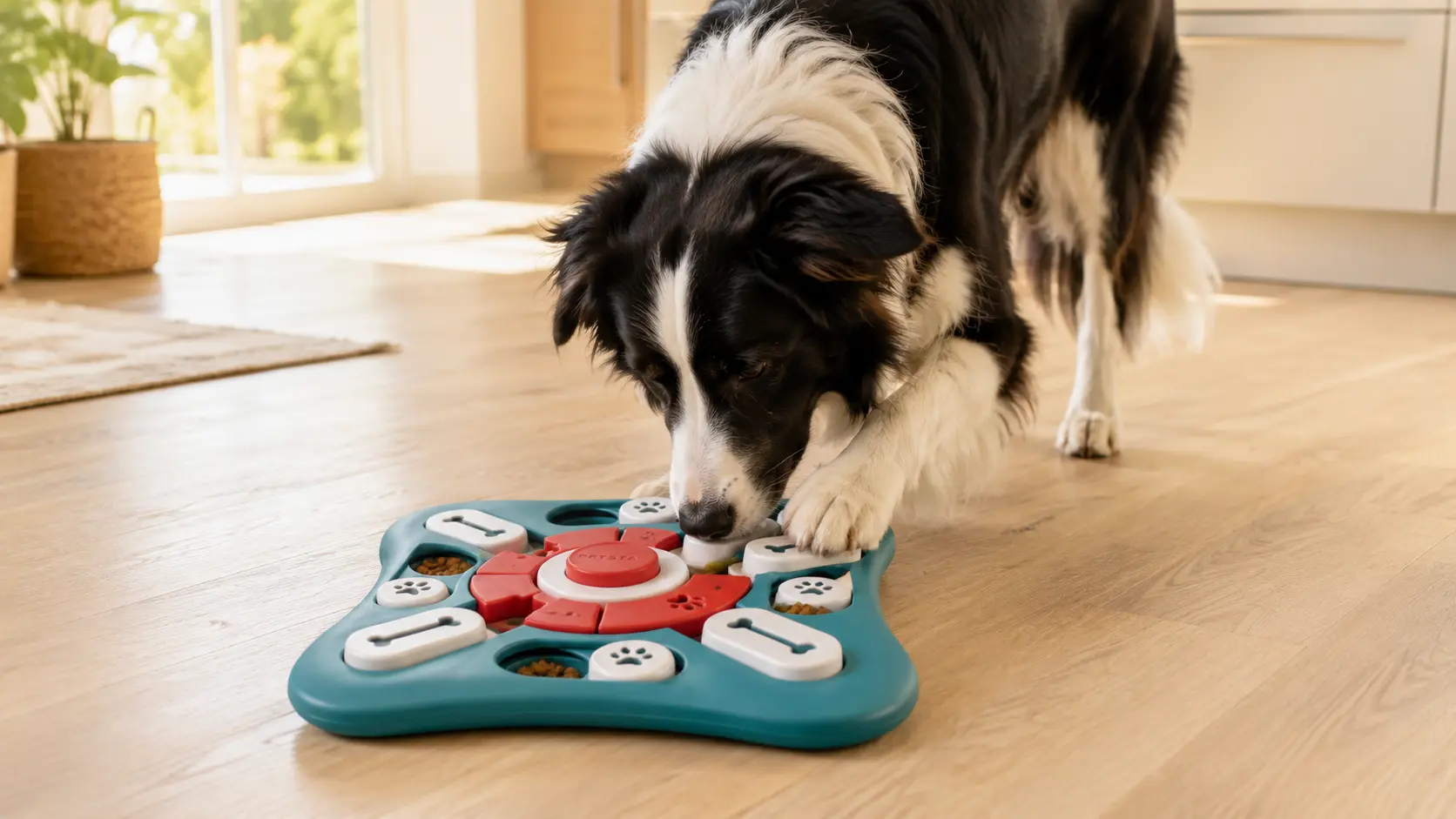
Who It Is For
A dog puzzle toy like this one earns its keep in two very different situations, which is part of what makes it a smart single purchase. First, it's a genuine tool for mental enrichment for dogs that are understimulated, bored, or prone to destructive behavior out of sheer lack of things to do — working dog breeds, adolescent dogs with energy to burn, and senior dogs who can't get the same physical exercise but still need cognitive stimulation may benefit from the problem-solving demand of moving sliders to find hidden food.
Second, it functions as a slow feeder. Dogs that inhale their food in under a minute — a behavior linked to digestive upset and, in deep-chested breeds, a contributing factor some owners and trainers watch closely alongside bloat risk — are encouraged to slow down because the kibble is only accessible piece by piece, hidden under sliders and rotating pieces rather than sitting in an open bowl. If you're specifically comparing options and want the best dog puzzle toy for a fast eater who also needs more mental engagement, this dual-function design covers both needs without buying two separate products.
Main Features
- Multi-compartment sliding mechanism — hidden kibble wells are covered by bone-shaped sliding pegs that the dog must nose or paw aside to access food, providing a problem-solving task during use
- Slow-feeder function — can extend mealtime compared to a standard bowl, which is the core benefit for dogs that eat too fast
- Durable molded plastic construction — built from rigid, non-toxic plastic designed to withstand normal nosing, pawing, and sliding use from moderate players
- Non-slip base — designed to stay in place while the dog works the puzzle, rather than sliding across the floor and becoming a chase toy instead of a brain game
- Two sliding patterns — combines circular and linear sliding mechanisms that the dog must move to uncover the hidden food compartments
Pros & Cons
| Pros | Cons |
|---|---|
| A supervised way to add daily cognitive stimulation without extra training time | Sliding pegs and bone-shaped pieces are plastic — not designed to withstand a committed chewer |
| Can slow down fast eaters by forcing piece-by-piece food access | Determined dogs can work pieces loose or chew them down if left with the toy unsupervised |
| Easy to clean and reset between meals | Not a substitute for physical exercise — mental enrichment complements, but doesn't replace, daily activity needs |
| Non-slip base keeps the toy stationary during use | Some dogs figure out the sliding mechanism quickly and need the next difficulty level to stay engaged |
| Dual-purpose design covers both enrichment and mealtime pacing in one product | Loose or chewed-off small pieces are a genuine swallowing hazard if supervision lapses |
Honesty note that matters: this toy is built for supervised interactive play and feeding, not as an unsupervised chew toy. The same sliding pegs that make it mentally engaging are small enough to become a choking hazard if a heavy chewer manages to work one loose and swallow it.
Who Should Skip It
Skip the petsta dog puzzle toy if your dog is a documented heavy chewer or has a history of destroying and ingesting plastic toys — the bone-shaped sliders and smaller compartment pieces are built for nosing and pawing, not for withstanding sustained jaw pressure. A dog that treats every new object as something to be dismantled and swallowed needs a toy built from chew-resistant rubber or reinforced material, not a plastic puzzle feeder with integrated parts that can become loose if damaged.
Also reconsider it if your dog shows food-guarding or frustration-based reactivity around slow feeders specifically — some dogs get more agitated, not less, when food access is deliberately slowed, and that's worth addressing with a trainer before introducing a puzzle-style feeder. And if you're buying this purely hoping it will prevent bloat on its own, treat that as one piece of a bigger picture rather than a guaranteed fix — talk to your vet about your dog's individual risk factors, especially for deep-chested, large-breed dogs.
Head-to-Head Comparison
| Factor | PETSTA Puzzle Toy | Standard Open Food Bowl |
|---|---|---|
| Eating pace | Slower — food is compartmentalized behind sliders | Fast, unrestricted access — no pacing control |
| Mental stimulation | High — active problem-solving required to access food | None — no cognitive engagement |
| Chew resistance | Moderate — fine for nosing/pawing, not built for heavy chewers | Not applicable — no small parts to chew off |
| Cleaning | Multiple compartments and sliders to clean | Single surface, faster to clean |
| Best for | Bored, food-motivated, or fast-eating dogs needing engagement | Dogs with no eating-pace or enrichment concerns |
Safety / Veterinary Guardrail
Always supervise the first several sessions with any new puzzle feeder, and periodically check that the sliding pegs and small pieces remain securely intact over time — plastic components can wear down or crack with repeated heavy use, even from dogs that aren't classic "destructive chewers." If a piece comes loose, remove the toy from rotation immediately rather than letting your dog continue unsupervised access.
Slow feeders can be a helpful part of managing fast-eating behavior, but they are not a verified medical prevention method for bloat (gastric dilatation-volvulus), which is a serious, sometimes life-threatening condition especially common in large, deep-chested breeds. If your dog is a breed at elevated bloat risk, or has ever shown symptoms like a distended abdomen, unproductive retching, restlessness, or sudden lethargy after eating, treat that as an emergency and contact your veterinarian immediately — don't rely on a slow feeder as your sole prevention strategy. A vet can advise on feeding frequency, portion size, and post-meal activity restrictions specific to your dog's risk profile.
Frequently Asked Questions
Is the Petsta puzzle toy safe to leave with a dog unsupervised?
No, it's built for supervised interactive play and feeding, not as an unsupervised chew toy — determined dogs can work pieces loose or chew them down if left alone with it.
Does the Petsta toy work as a slow feeder?
Yes, kibble is only accessible piece by piece under sliders and rotating pieces, which encourages dogs that inhale food in under a minute to slow down.
Is the Petsta toy chew-proof?
No, the sliding pegs and bone-shaped pieces are plastic and not designed to withstand a committed chewer.
Does the puzzle toy prevent bloat?
No, it's not a verified medical prevention method for bloat — talk to your vet about your dog's individual risk factors rather than relying on a slow feeder alone.
Check Current Price on Amazon →
Affiliate link: as an Amazon Associate, Pawful Dreams earns from qualifying purchases.