Pawful Dreams may earn a commission when you buy through links on this page, at no extra cost to you. Please read our Affiliate Disclosure for more information.
Last updated: September 2026
Quick Verdict
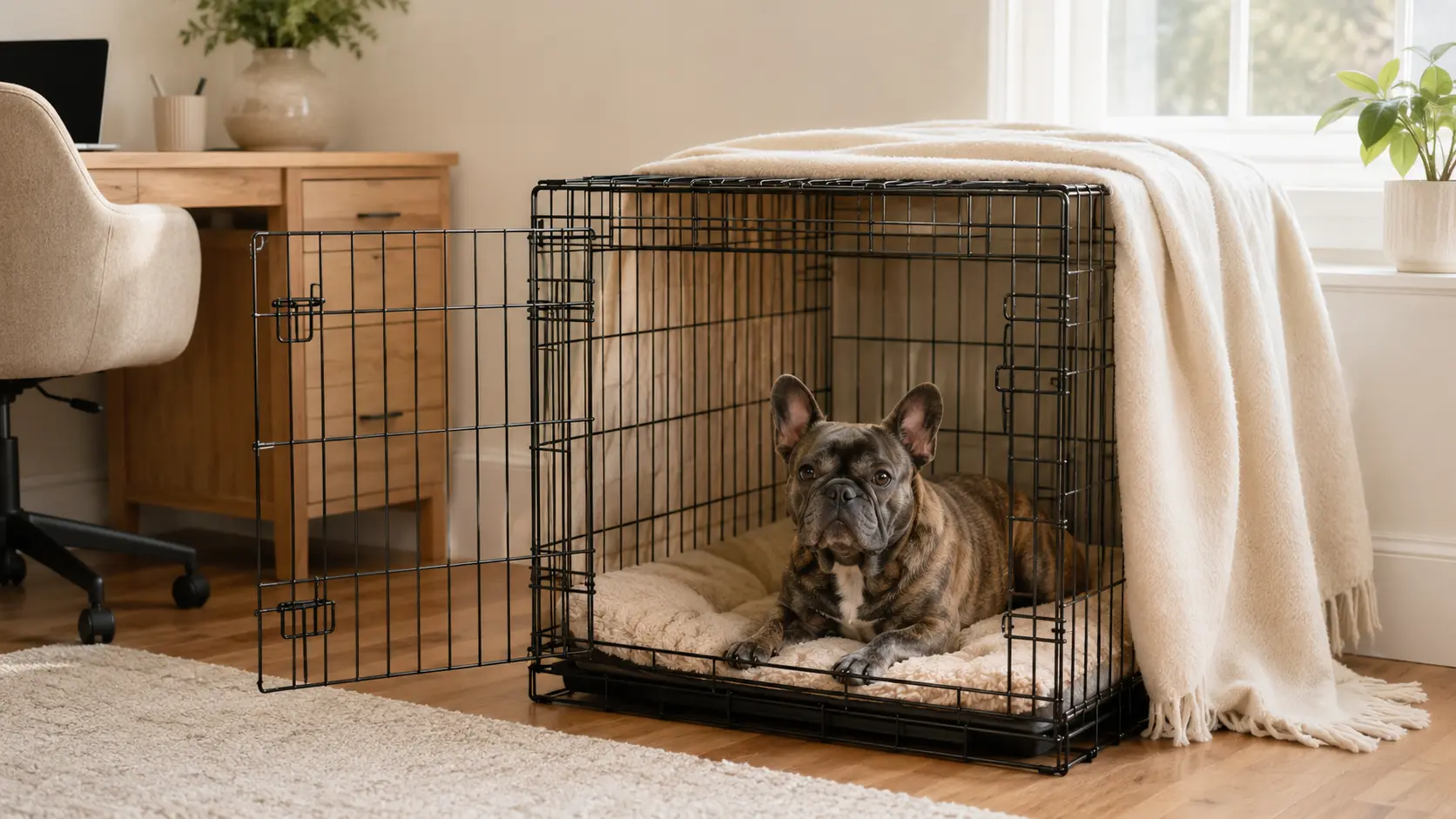
Direct Answer: According to MidWest's published product catalog, this is a foldable wire crate with a divider, slide-bolt latch, and removable pan. Pawful Dreams considers it a practical den-training option for dogs that settle comfortably when confined; it is a poor fit for heavy chewers, escape artists, or dogs that panic in a crate.
The midwest icrate dog crate is a well-built, easy-to-assemble containment solution for calm-to-anxious dogs — and a poor match for heavy chewers or escape artists without reinforcement. Sizing runs true when matched to the manufacturer's measurement guide. Great den-training tool; not a chew-proof enclosure.
Check Current Price on Amazon →
Affiliate link: as an Amazon Associate, Pawful Dreams earns from qualifying purchases.
Who It Is For
A collapsible dog crate like the iCrate is designed for dogs who benefit from having a defined, den-like space — puppies in training, adult dogs who already settle calmly in a crate, and calmer breeds that see the crate as a retreat rather than a cage to escape. It's also a strong fit for owners who need something that folds flat for travel, vet visits, or moving between rooms, since the collapsible wire-frame design is genuinely fast to set up and break down.
If you're specifically researching the best dog crate for separation anxiety, this crate works well as part of a broader crate training a dog with separation anxiety protocol — but the crate itself is a tool, not a fix. Dogs with true separation anxiety need gradual desensitization to being alone, and the crate's job is to provide a secure, familiar space during that process, not to physically prevent distress on its own.
Main Features
- Fold-and-carry wire frame — collapses flat in seconds for storage or transport, no tools required for daily use
- Double-door or single-door configurations — double-door models allow flexible placement in tight spaces or vehicles
- Included bottom tray and divider panel — the divider lets you resize the crate as a puppy grows into its adult dimensions, rather than buying multiple crates
- Multiple size options — generally runs true when selected using the manufacturer's measurement guide
- Simple slide-bolt latch system — functional out of the box, though not rated for determined escape artists without aftermarket reinforcement
Pros & Cons
| Pros | Cons |
|---|---|
| Owner feedback reviewed for this article includes reports of straightforward, quick assembly | Not chew-proof; direct owner reports describe determined chewers going through wire panels quickly |
| Sizing runs true when matched to the manufacturer's measurement guide. | Puppy owners who size for current (not adult) weight frequently have to reorder a larger crate |
| Included bottom tray is a nice bonus | The included tray and mat are not chew- or scratch-resistant — treat as a bonus, not a durability feature |
| Folds flat for storage, travel, or moving between rooms | Factory door latch is a reported weak point — strong or anxious dogs can pop it open from the inside |
| Good airflow and visibility versus solid-wall crates | Not a good fit for anxious dogs that respond to confinement by attacking the crate itself |
Reinforcement tip that matters: for households with a known chewer, Reddit's dog training communities consistently recommend adding zip-ties along every panel seam and the bottom tray, plus a carabiner or leash-snap clip on the main door latch, before relying on the stock hardware alone.
Who Should Skip It
Skip the unmodified midwest icrate dog crate if your dog is a documented heavy chewer or escape artist. This isn't a durability complaint that applies to a small minority — the owner feedback reviewed for this article includes repeated reports: wire crates simply don't hold up against a dog determined to bend wire, pop a bottom latch, or flip the crate to squeeze out underneath. For that dog, either plan on aftermarket reinforcement (zip-ties on every seam, an upgraded latch clip) from day one, or consider a heavy-duty airline-style plastic or metal-bar crate instead.
Also skip it — or at minimum, pair it with a behaviorist consult — if your dog's reaction to being crated includes self-injury: bloody gums, broken nails or teeth, or panicked, sustained escape attempts. That's a sign the issue is the confinement itself triggering panic, not a hardware problem the crate can solve.
Head-to-Head Comparison
| Factor | MidWest iCrate (Wire) | Heavy-Duty Airline/Plastic Crate |
|---|---|---|
| Chew resistance | Low — vulnerable to determined chewers | High — solid walls resist chewing and clawing |
| Airflow & visibility | Excellent — open wire design | Limited — enclosed sides, less visibility |
| Portability | Folds flat, lightweight | Bulkier, doesn't collapse flat |
| Best for | Calm dogs, puppies in training, mild separation anxiety | Documented chewers, escape artists, airline travel requirements |
| Price positioning | Generally the more budget-friendly option | Typically a higher price point for the added durability |
Safety / Veterinary Guardrail
Crate training should never be used as punishment, and a properly introduced crate should feel like a safe space, not a trap. If your dog shows signs of true separation anxiety — destructive escape attempts, drooling, howling, or self-injury specifically when left alone or confined — a crate alone will not resolve the underlying issue. That level of distress warrants a conversation with your veterinarian or a board-certified veterinary behaviorist about a structured desensitization plan, and in some cases, medication support, used alongside (not instead of) proper crate training. If you ever notice bleeding gums, broken teeth, or torn nails from crate-escape attempts, treat that as an urgent sign to pause confinement and get professional guidance before continuing.
Frequently Asked Questions
Is the MidWest iCrate chew-proof?
No. Owner reports describe determined chewers going through the wire panels quickly, so it's not rated for heavy chewers without aftermarket reinforcement.
How can I reinforce the crate for a chewer?
Add zip-ties along every panel seam and the bottom tray, plus a carabiner or leash-snap clip on the main door latch, before relying on the stock hardware alone.
Does the divider panel let the crate grow with a puppy?
Yes, the included divider panel lets you resize the crate as a puppy grows into its adult dimensions instead of buying multiple crates.
Are the crate's tray and mat scratch-resistant?
No, the included tray and mat are not chew- or scratch-resistant and should be treated as a bonus rather than a durability feature.
Check Current Price on Amazon →
Affiliate link: as an Amazon Associate, Pawful Dreams earns from qualifying purchases.